Playing in and with public space
Space is under pressure. Who can use the available space and when? This is an ongoing concern that has been gaining importance in recent years. And what space is left for children and young people? The small-scale youth partnership PLAYces of the Vlaamse Dienst Speelpleinwerk (VDS), De Ambrassade and their Dutch partner Jantje Beton looked for answers and solutions.
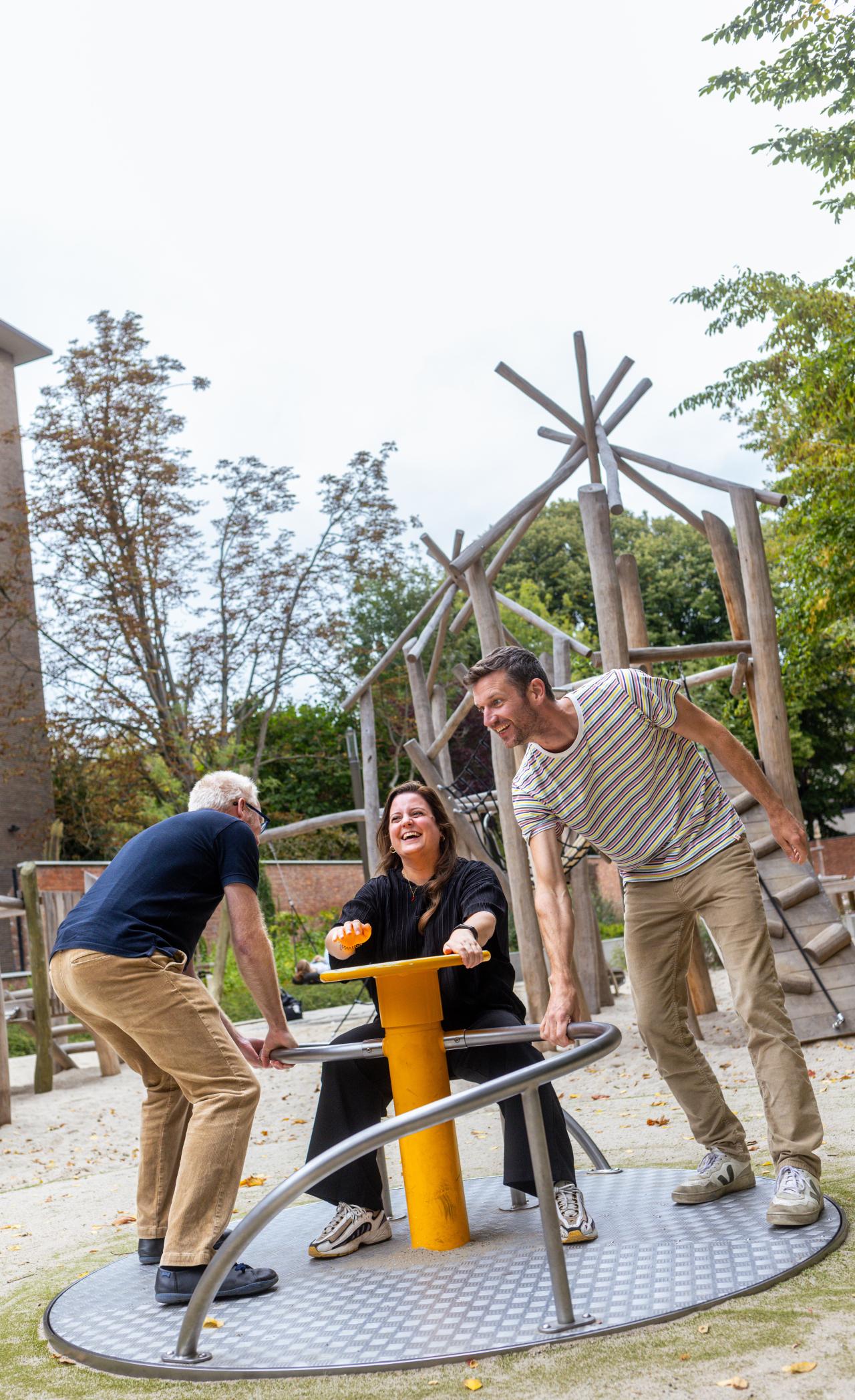
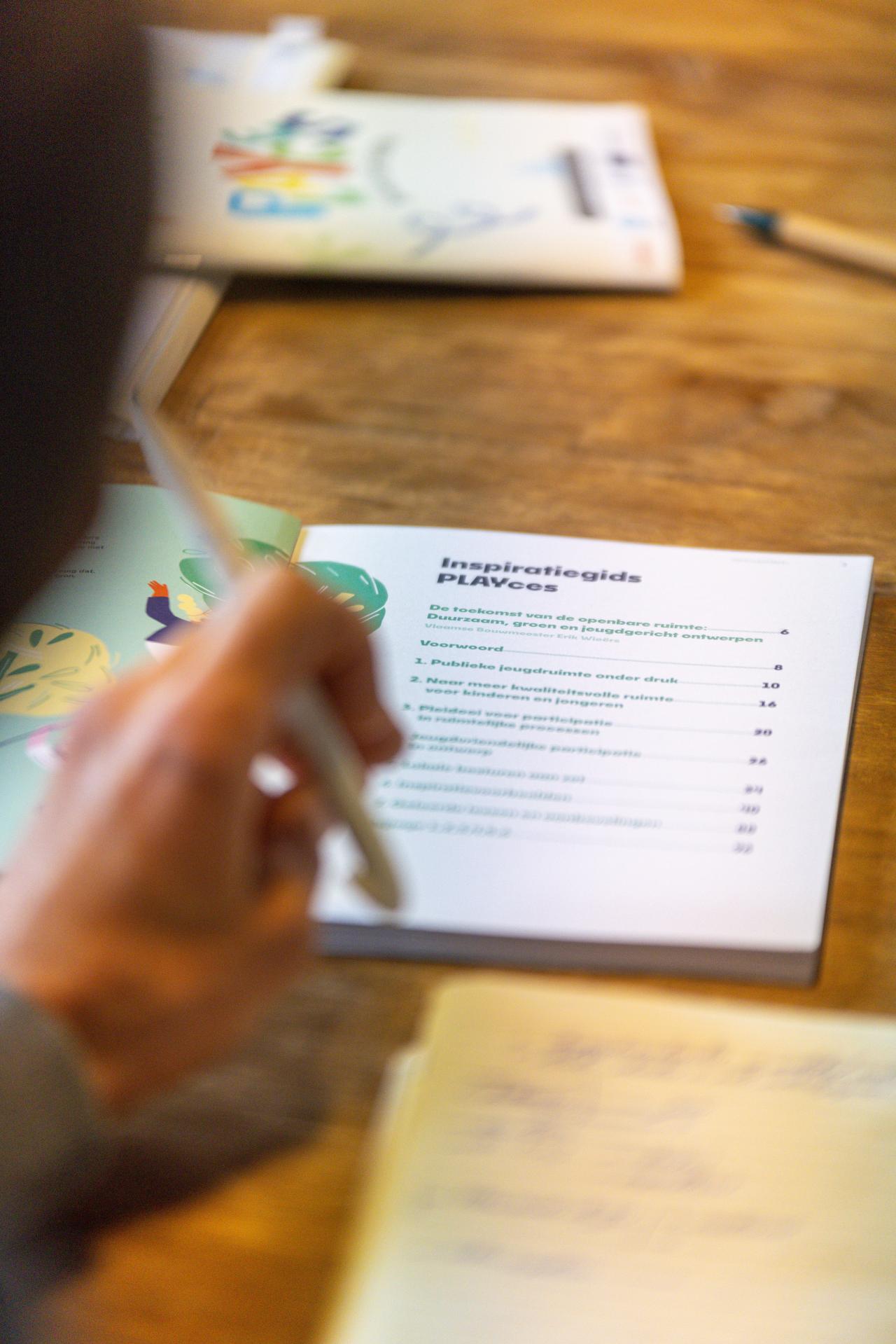
How do you involve children and young people in shaping public spaces? PLAYces came up with an inspirational guide listing best practices from Flanders and the Netherlands. We met up with Tine Bergiers from VDS, Peter Bosschaert from De Ambrassade, and Wouter Vanderstede from Kind & Samenleving to learn more. The latter organisation is highly involved in the project and is a constant value in youth and public space matters.
International playground
The three organisations share the same vision and advocate for more youth spaces in Flanders. This shared concern led to the creation of the PLAYces project. “The common thread is the participation of children and young people,” explains Tine. “We give them a mandate to help shape the space. So that they can play not only in a space, but also with a space.”
Tine points out last month’s newspaper headlines: ‘Children are playing outside less’. As well as: ‘Alderman of municipality X closes playground’. “This makes me wonder,” she continues “what is the cause and what are the consequences? The issue is broader than that, but it does show the power adults have to choose how public space is used. That power is unfairly distributed. That is why projects such as PLAYces are necessary.”
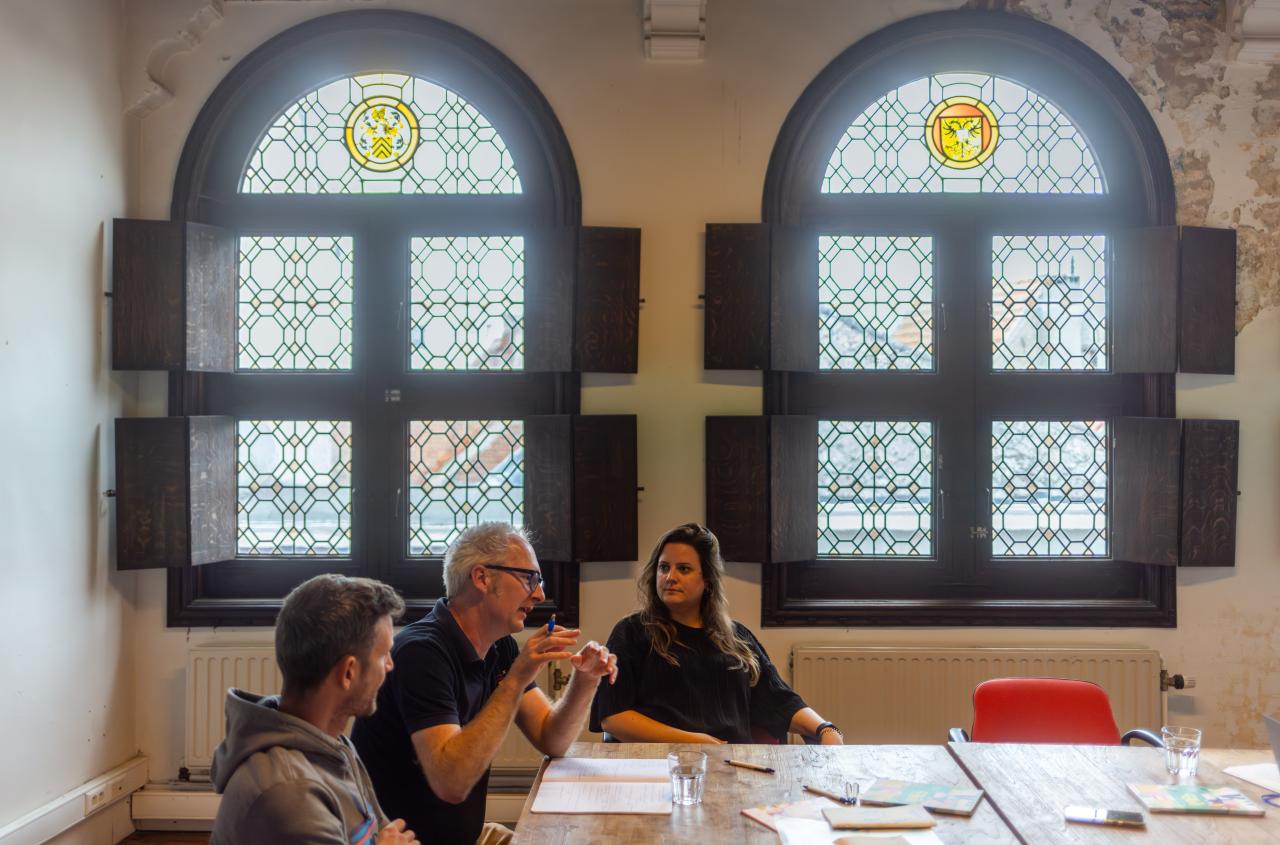
A diverse group of Flemish and Dutch people saw some great examples during a multi-day exchange. Their purpose: to meet and support each other. This helped the participants find a common language to convince others of the added value of getting kids and young people involved in processes concerning public space.
The choice of working with a Dutch partner was a deliberate choice. “We speak the same language, literally,” explains Tine. “Thanks to the similar context in both countries, we can move on to the content more quickly.” Despite these similarities, the differences are also proving to be very informative. For instance, Flanders is more ahead in terms of participation, while in mobility, there is much to learn from Dutch practices. Peter emphasises that “the international aspect has added a clear value”.
Children and young people are more fun
Renovating public spaces often involves a process of participation with local residents. In recent years, there has been a growing intention to specifically involve children and young people in this process. However, there is still room for improvement, especially in ‘hard’ sectors. Tine: “That is why we deliberately put together a group from different fields for the study visit. For example, the Department of Environment was also present.”
“We want to convince all those involved in spatial planning of the added value in involving children and young people,” explains Peter. “PLAYces is therefore primarily about getting everyone involved. Not just youth workers, but also local government officials.”
Young people are more positive and less likely to have their own agenda. They also take more than just their own needs into account. Children and young people see a lot.
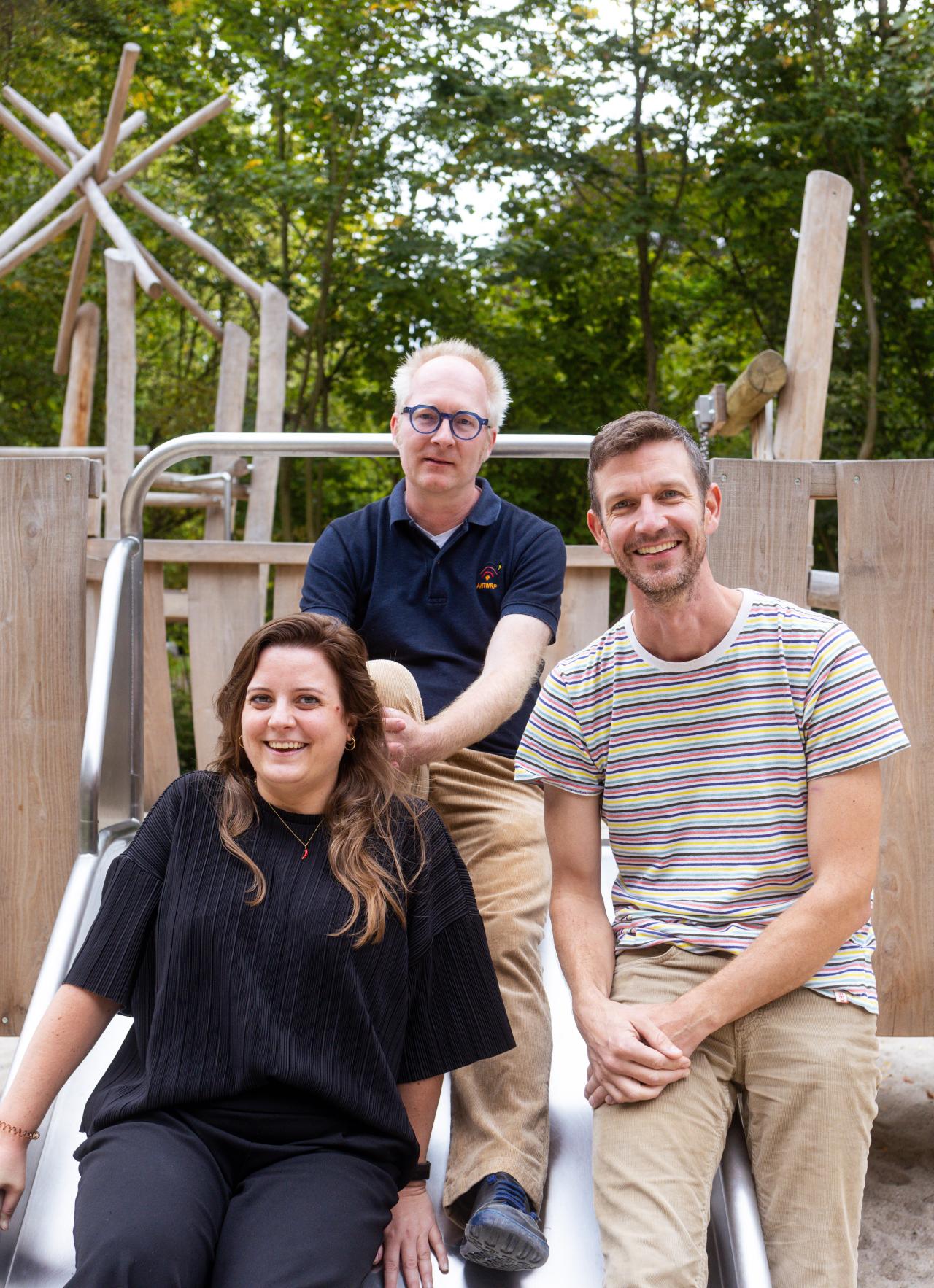
Wouter: “One of the better reasons is that this kind of participation process is just more fun with kids and young people than with adults (laughs). Young people are more positive and less likely to have their own agenda. They also take more than just their own needs into account. Children and young people see a lot.” Tine adds: “For example, they think about their grandmother who comes to the playground and needs a bench to sit on. Adults have a narrower view of public space.”
“Above all, we want to tell a positive story and emphasise the possibilities,” explains Peter. “We want to show the added value that youth work can offer in these kinds of ‘harder’ processes”, says Tine. “Youth work can play a major role in terms of inclusion,” points out Peter. Wouter agrees: “When it comes to involving children and young people with fewer opportunities, there has already been a lot of improvement. But there are still steps to be taken.” According to Peter, this is precisely where youth work has an advantage: “Youth work organisations already know the hard-to-reach target groups. They take the time to really be present in the places where it matters.” Tine refers to Parc Ouest by Toestand vzw as an inspiring practical example. There, locals and children have collaboratively shaped the park into something that works for them, emerging from everyday encounters rather than a predefined plan.
Away from the youth reserves
Cross-sector collaboration is vital. This is also evident from the types of spaces featured in the inspiration guide.
Peter: “Space for children and young people can mean many things.” Tine: “It’s not just about playgrounds, but also about the street or parking. In the Netherlands, for example, the pavements are much wider. They have become part of the play area for children. If you cut down on space when renovating public areas, you limit their play area.”
Peter: “Public spaces should not be designed solely for children and young people. We want to move away from the typical ‘youth reserves’. Giving children and young people a say is just as important in projects that do not involve playgrounds.” Wouter: “Mobility, for example, is very important for children and young people, but politically difficult. A large, unsafe regional road can be a real barrier for teenagers.” Peter: “We are working hard to get the Department of Mobility on board, for example. There are still too many barriers between different sectors and services.”
In this regard, Flemish organisations learned a great deal from the Netherlands. Tine: “That is a point of criticism for us. We always say: playing is for playing, we should leave other functions out of it. In the Netherlands, they manage to link many more objectives to playing and thus get more sectors involved. This in turn leads to higher budgets for a project: not only from youth, but also from the environment or health sectors.”
The future
What does the future hold? From our conversation, it seems that we can expect both challenges and dreams. The organisation Kind & Samenleving would like to focus even more on teenagers and young people. “It’s harder to create space for young people than for children. We want to do justice to the participation of young people, not just children,” says Wouter.
Ideally, the idea of children and young people participating in processes relating to public space will be incorporated into policy. Peter: “It is already included in De Ambrassade’s policy document and in the Youth and Children’s Rights Policy Plan (JKP). One of the four priorities for the JKP 2025-2029 is ‘having space to be young’.”
The power to decide how public space is used is unfairly distributed.
PLAYces clearly lives on. The participants in the study visit are already asking for a follow-up, and there are requests from abroad for a translation of the inspiration guide. To be continued!

Text: Laure Lambert
Image: Tuur Tisseghem
This article was published in the 14th edition of SCOOP magazine